



























































ABA progress updates may include percentages, graphs, goal status, or session data. These numbers can be useful, but they do not always show how much support the child needed, whether the skill appears in everyday life, or how comfortable the child was.
Progress is individual. The same percentage can mean different things depending on the child’s starting point, level of support, and where the skill is being used.
If you are new to ABA progress reviews, see BridgeCare’s guide to your child’s first 30 days of ABA therapy.
Quick Answer: Questions to Ask About Progress
When reviewing an update, ask:
- What changed from the starting point (baseline)?
- What counted as an independent response?
- What prompts or support were used?
- Is the skill appearing in everyday settings and routines?
- How are the child’s comfort, preferences, and communication being considered?
Start With What the Goal Is Actually For
Before reviewing the data, start with why the goal matters in everyday life.
A skill is more meaningful when it is useful outside a teaching session. For example, asking for a break matters when the child can use it during school, family routines, or difficult moments. Dressing skills matter when they help with real routines such as getting ready for school.
It is also worth checking whether the goal still reflects the child’s and family’s current priorities. Needs and priorities can change over time.
Questions to Ask
- What everyday difference is this goal meant to make?
- Does it still match our family’s priorities and our child’s current needs?
- How are our child’s preferences and communication being considered?
You do not need to interpret every data point yourself. The BCBA can explain the measurements, while you can share what you are noticing at home and what feels meaningful for your child.
Ask What the Starting Point and Measurement Mean
Progress numbers are easier to understand when you know the starting point, or baseline, and exactly what was measured. Baseline shows how the child was performing before or at the start of teaching a skill; it is a reference point, not a prediction.
Progress may be measured using percentages, frequency, duration, or observed opportunities. Ask what the number represents and under what conditions it was collected.
Important questions include:
- How was an opportunity defined?
- What counted as a correct or independent response?
- What are the mastery criteria for this goal?
- Did the setting or measurement method change?
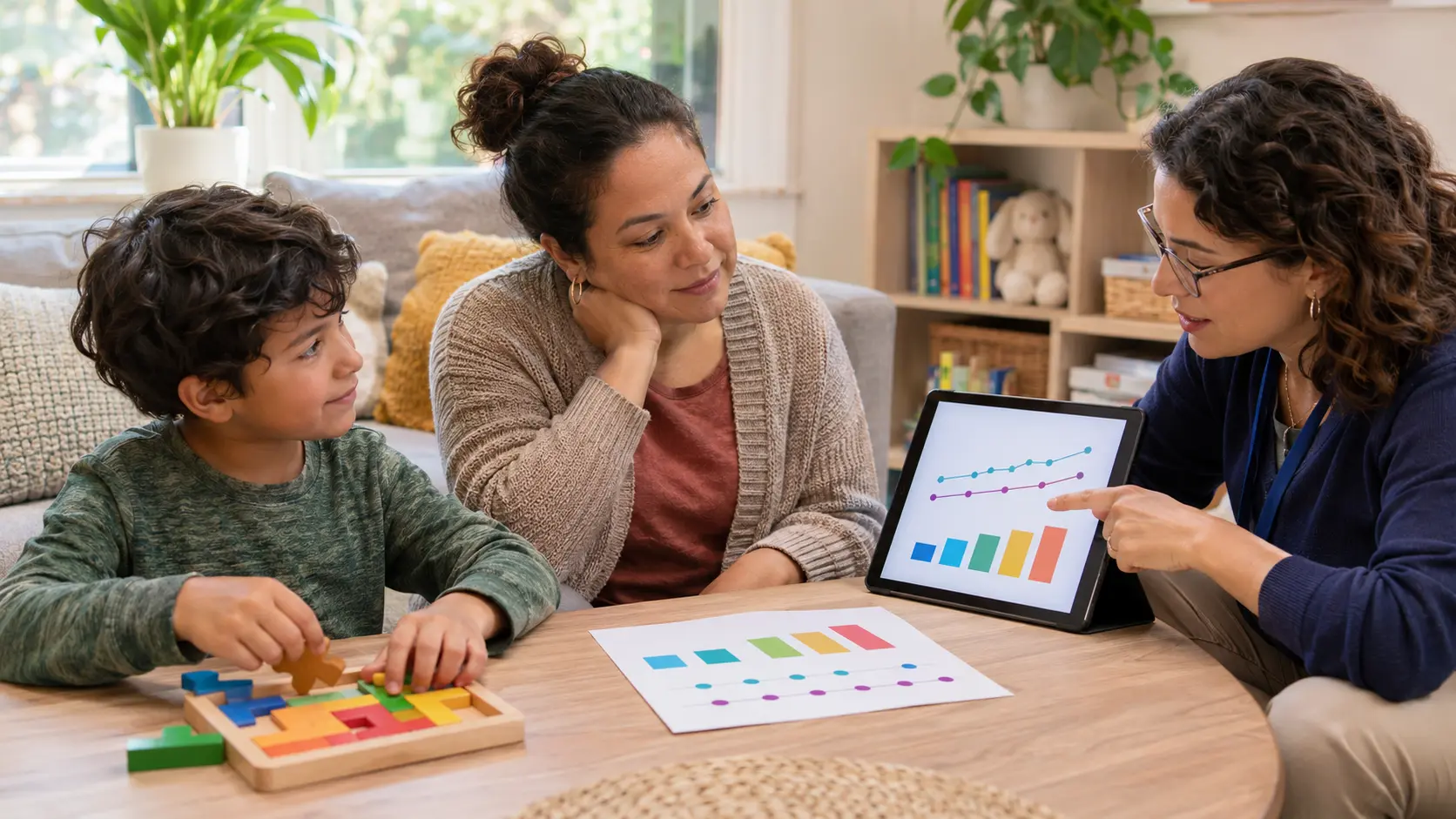
The example below is illustrative only. It is not a benchmark or expected progress pattern for any child.
When reviewing a real report, ask “What was measured, and what was the starting point?” rather than simply deciding whether a number looks good or bad.
Understand Independent Use Versus Supported Performance
A progress update should show how much support the child needed to use a skill. This may be described by the type or level of prompting used, while performance may also be recorded as independent when no prompt is needed.
Using less support may show increasing independence for some goals. However, fewer prompts do not always mean better progress.
Some supports may remain appropriate, including:
- AAC devices
- Visual schedules
- Written cues
- Environmental accommodations
- Caregiver assistance when needed
These supports should not automatically be treated as something to remove.
Questions to Ask
- What counted as an independent response?
- What support or prompts were used?
- Has the level of support changed over time?
- Which supports are meant to remain because they help the child participate or communicate?
The goal is to understand whether the child is becoming more independent where appropriate, while keeping useful supports in place.
Discuss Everyday Settings, Comfort and Preferences
A skill used successfully in a teaching session is only part of the picture. It is also important to ask whether the child is using the skill in everyday settings and routines where it is actually useful.
Families can share observations from home, school, or community settings to add context to the clinical data.
Also discuss the child’s comfort and preferences. Consider:
- Does the child seem comfortable during the routine?
- Are there signs of stress, avoidance, or frustration?
- Is the child communicating a preference or need for a break?
- Does the support still fit the child’s current needs?
Comfort and preference should be considered alongside skill data when deciding whether a strategy should continue, change, or pause.
If concerns involve medical discomfort, significant emotional changes, or issues outside the ABA team’s scope, discuss them with the appropriate healthcare or specialist professional.
Agree What to Review Next With the BCBA
A progress review should end with a clear understanding of what happens next.
Review timing can vary by treatment plan, clinical need, provider process, payer requirements, and applicable rules. Ask the BCBA what schedule applies to your child and what will be reviewed.
Questions to Bring to the Review
- What changed from baseline, and what does that mean in daily life?
- What counted as independent versus supported performance?
- What prompts, accommodations, or communication supports are still being used?
- Where is the skill showing up outside teaching sessions?
- How are comfort, preferences, and communication being considered?
- What will the team continue, change, pause, or review?
- When is the next progress review, and what information should the family bring?
Exploring ABA Services or Have Questions About Progress?
If your family is exploring ABA therapy, BridgeCare can explain its intake process, how goals and progress are discussed, and whether services are available in your area.
If your child already receives ABA, bring questions about baseline, support levels, comfort, and everyday use to the child’s BCBA or clinical team.