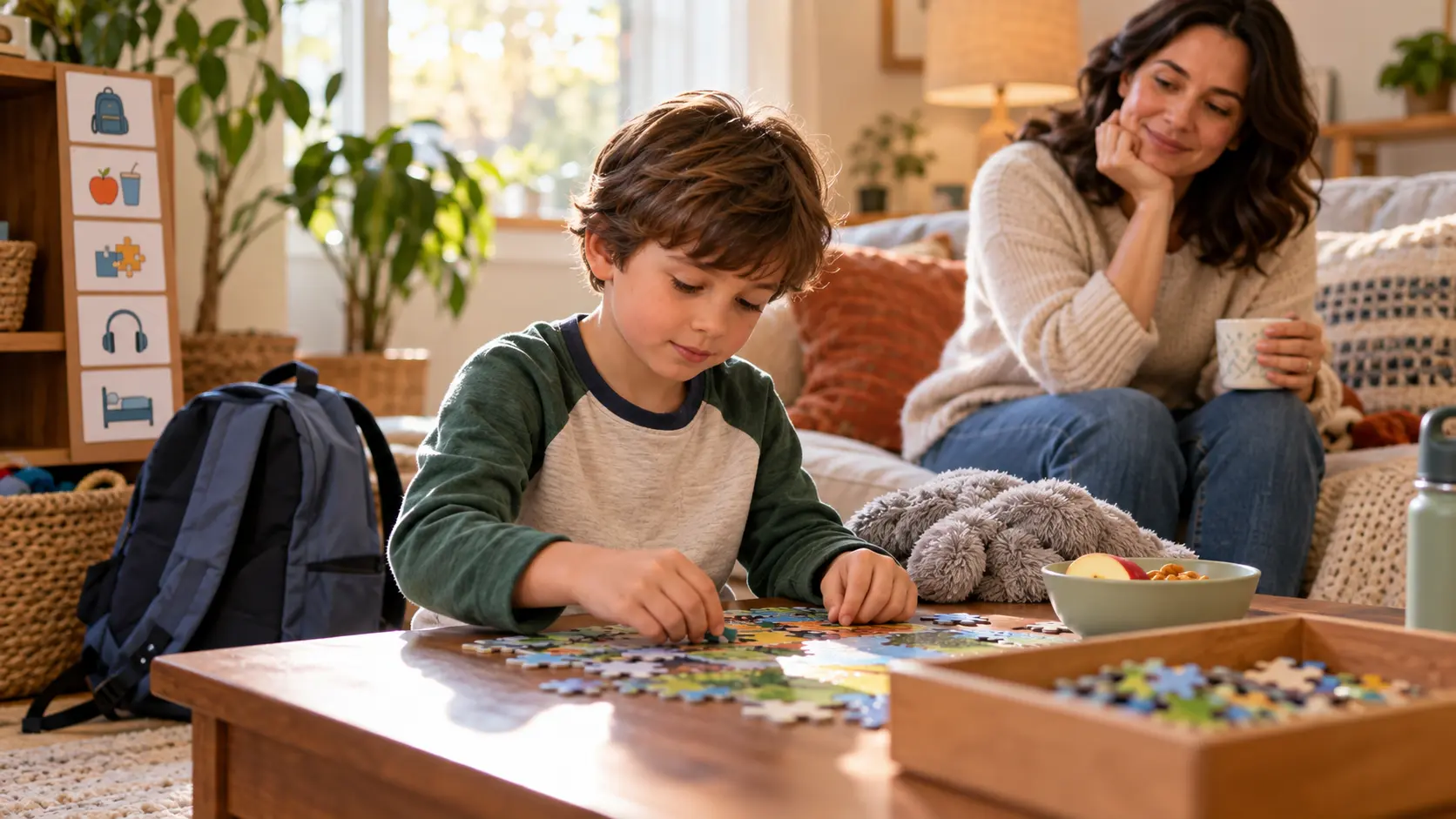




























































Halloween can bring a lot of sensory and social demands at once: costumes, flashing decorations, sudden sounds, unfamiliar routes, crowds, strangers, and expectations around trick-or-treating.
Some autistic children may enjoy many parts of Halloween. Others may find certain parts overwhelming. Often, the best approach is somewhere in between—keep what your child enjoys, adjust what is difficult, and skip what is not worth the stress.
The goal is not to make your child tolerate a full Halloween experience. It is to create a flexible plan based on their preferences, with clear options to pause, change the plan, or stop whenever they are ready.
Start With Your Child’s Preferences
Before choosing a costume or planning a route, start with what your child enjoys, understands, and finds difficult.
Offer choices in the communication style that works best for them, including speech, AAC, pictures, or signs.
Consider:
- Costume: Would they enjoy one, prefer regular clothes with a small Halloween item, or skip it?
- Going out: Are they interested in trick-or-treating, or would a shorter visit to a familiar house feel better?
- Sensory needs: Which sounds, lights, crowds, or textures may be difficult? What supports help?
- Communication: Can they easily say or signal “no,” “break,” “home,” “finished,” or “help”?
A request to stop, leave, or skip an activity is communication, not failure. Build a clear exit option into the plan and respect it when your child uses it.
Not every autistic child finds Halloween overwhelming. Some enjoy the excitement, costumes, decorations, or candy. The goal is to plan around your child’s individual preferences, not assumptions about autism.
Choose Comfortable Clothing or Skip the Costume
Costumes can bring sensory challenges such as scratchy fabric, tight clothing, masks, face paint, wigs, unfamiliar shoes, or too much warmth.
If your child wants to wear a costume, try it briefly at home first with no pressure to keep it on. Their reaction can help you decide what will work on Halloween.
Comfortable alternatives include:
- A favorite T-shirt or hoodie in Halloween colors
- One simple accessory they enjoy
- Pajamas or everyday clothes
- Part of a costume without uncomfortable pieces
- No costume at all
Comfort matters more than appearance. Your child should still be able to move, communicate, and use their usual sensory supports.
Also consider practical Halloween safety: choose clothing that is comfortable for walking and visible enough for outdoor activities after dark.
Build a Simple Visual Plan
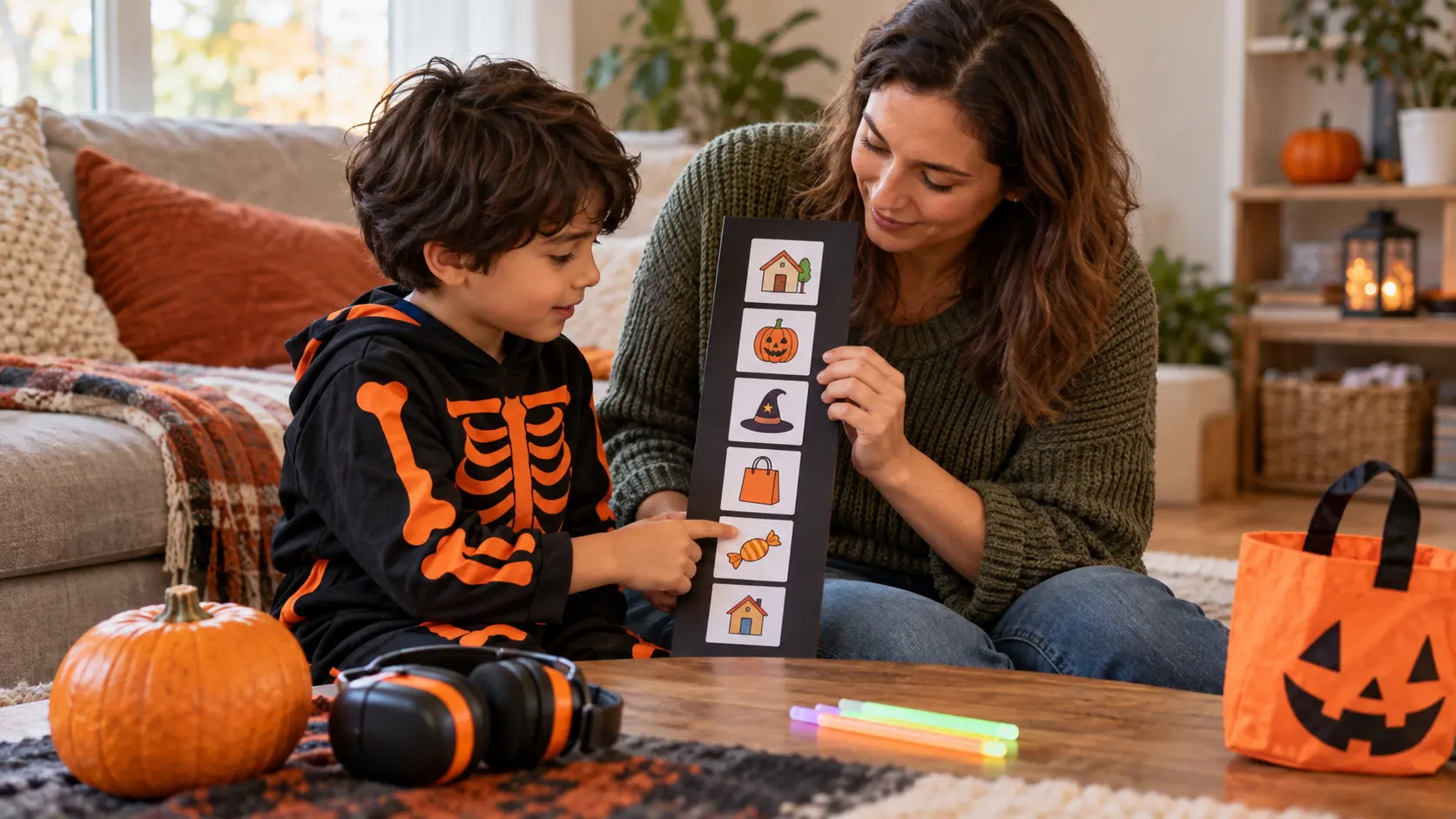
A visual plan can help some children understand what is happening, what comes next, and when the activity is finished. If visual supports are useful for your child, keep the plan short and flexible.
For more ways to build predictability into everyday activities, see our guide to routines and structure for autistic children.
A simple Halloween sequence might look like this:
Review the plan before Halloween if that helps your child prepare. If repeated rehearsal increases anxiety, a brief preview may be enough.
The most important part is that changing or ending the plan is built in from the start. Visual supports should increase predictability, not create pressure to complete every step.
Plan Communication, Breaks, and a Short Route
A smoother Halloween often depends less on how many houses you visit and more on whether your child can communicate, take breaks, and leave when needed.
Before going out, confirm:
- Communication access: Make sure your child can signal “no,” “finished,” “break,” “home,” “too loud,” or “help.” If they use AAC or a communication card, keep it available throughout the activity. Do not require speech, eye contact, or a specific greeting.
- Break plan: Decide in advance where the child can pause, such as the car, stroller, a quiet porch, or home.
- Exit plan: Make it clear that going home early is always an option.
Saying “trick or treat” is optional. A child may communicate with a wave, gesture, AAC, a card, or simply by approaching with their bag.
Keep the route short and familiar when possible. One or two comfortable houses can be enough. Success should be based on your child’s comfort, not the number of stops completed.
If your child needs close supervision in public, use the safety approach that already works for your family rather than introducing something new on Halloween night.
Prepare for Changes Without Pressure
Halloween rarely goes exactly as planned. Decorations, crowds, weather, and your child’s energy level can all change the experience.
A flexible plan should make room for those changes. If something unexpected happens, use a calm preview such as:
“This house is loud. We can skip it.”
Watch for signs that the plan needs to change:
Do not make the child stay in an overwhelming situation just to “get used to it.” Taking a break, shortening the route, changing activities, or going home early are all valid parts of a sensory-friendly Halloween plan.
If noise is a common source of overwhelm for your child, see our guide to autism and noise sensitivity for additional strategies.
Enjoying Halloween at Home Instead
Staying home can be a completely valid Halloween plan. It does not have to be a fallback or a sign that something went wrong.
At-home options might include:
- Handing out treats from the porch or door
- Watching a favorite movie or show
- Decorating, painting, or carving a pumpkin
- Using glow sticks or other familiar light-based activities
- Having a small gathering with familiar people
- Keeping the evening completely routine if that is what your child prefers
You can also celebrate at a different time, such as during daylight hours or on another day, if that makes the experience easier.
The goal is not to create a “perfect” Halloween. It is to choose activities your child can genuinely enjoy, comfortably participate in, or opt out of altogether.
A Smaller, Quieter, or Different Halloween Is Still a Success
Halloween does not need to look a certain way to be successful. One house, regular clothes, an AAC message, handing out treats from home, or skipping Halloween entirely can all be valid choices.
Use this quick planning checklist:
Success is not measured by how long your child participates. It is whether the plan respects their comfort, communication, and preferences.
Need Support With Sensory Needs or Communication Beyond Halloween?
If challenges with communication, transitions, participation, or everyday routines extend beyond Halloween, BridgeCare ABA can discuss whether individualized ABA support and caregiver coaching may fit your child’s broader goals.
Contact BridgeCare ABA to learn more about ABA support and caregiver coaching.
A preference to skip or change Halloween activities is not by itself a reason to begin ABA therapy.